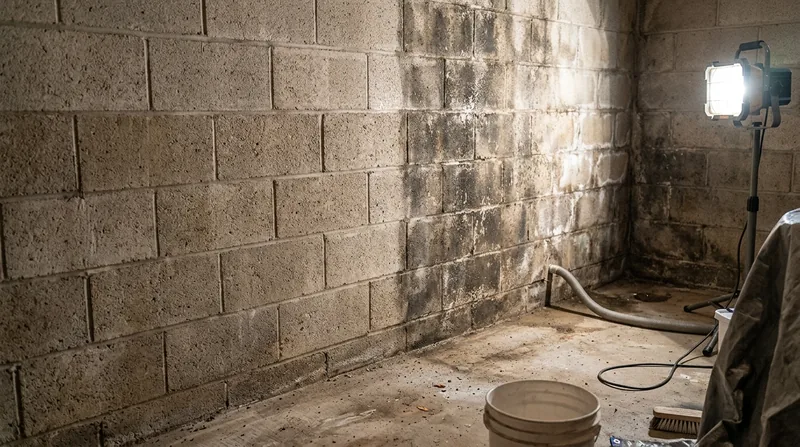




Bowie sits on the Atlantic Coastal Plain between the Patuxent River and the Washington suburbs, and that geography drives most of the mold calls we get. The sands and clays here hold a high water table near the Patuxent and Collington Branch, and the expansive Marlboro Clay layer swells, holds water, and pushes against foundations on slopes. Add humid Maryland summers and hurricane remnants like Isabel in 2003, and you get basements that stay damp long enough for mold to take hold. If you are dealing with a musty smell or visible growth on basement framing and drywall, Basement Mold Remediation in Bowie starts with finding the moisture source, not just wiping the surface. We pair containment and treatment of affected materials with the drainage or dehumidification fix that keeps mold from returning. Start with a free basement inspection so we can trace where the water is actually coming from.
Why Mold Takes Hold in Bowie Basements: Old Brick, Levitt Slabs, and Marlboro Clay
Bowie's housing stock is unusually varied for a city its size, and each era fails differently. Old Bowie's 1870s-1920s frame Victorians and cottages sit on brick and stone foundations that wick groundwater and show efflorescence. The 1960s Levitt-built Capes and the ranches and Colonials across Belair sections like Tulip Grove often have thin slabs and minimal original drainage. Pointer Ridge and Huntington split-levels from the 1970s-1990s sit on block basements with mortar joints that seep. Fairwood's 1990s-2020s brick-front Colonials and townhouses have finished poured-concrete basements where a failed sump pump or a backed-up discharge line soaks drywall and carpet fast. In every case, mold needs sustained moisture, and in Bowie that moisture usually comes from below grade.
- Hydrostatic pressure pushes water through block mortar joints and hairline cracks after heavy summer thunderstorms.
- A high water table near the Patuxent and Collington Branch keeps sump basins cycling long after the rain stops.
- Expansive Marlboro Clay on slopes traps water against foundation walls and can move footings over time.
- Humid summers keep unfinished basements above 60 percent relative humidity even when no water is visible.
- Clogged or short downspout extensions dump roof water right back against the foundation.
Treating the mold without correcting the moisture source is a temporary fix that fails by the next wet season.
Key info: A Huntington split-level we inspected had mold climbing the lower two feet of a block wall, but no standing water. The culprit was a failed check valve on the sump discharge line letting water drain back into the basin. We corrected the discharge and treated the wall, and the growth did not return through the next storm season.
For official guidance on moisture and mold in Maryland homes, the Maryland Department of the Environment publishes homeowner resources worth reviewing before you hire anyone.
How We Run Basement Mold Remediation in Bowie, Step by Step
Our process follows the moisture, not just the visible growth. We start by mapping where water enters and where it lingers: wall seepage, floor cracks, window wells, the sump basin, and the humidity level in the finished or semi-finished space. Only then do we set containment and begin remediation. The goal is to remove affected material, treat the surfaces that stay, and correct the drainage or humidity condition that let mold grow in the first place.
- We walk the basement and exterior, checking grading, downspout extensions, window wells, and the sump pump and discharge line.
- We measure moisture in framing, drywall, and concrete, and take air readings to confirm the musty smell source.
- We set up containment with plastic sheeting and negative air pressure so spores do not spread to the rest of the house.
- We remove porous materials that cannot be cleaned, such as soaked drywall, insulation, and carpet, and bag them for disposal.
- We treat structural surfaces with an antimicrobial application and HEPA-vacuum the contained area.
- We correct the moisture source, whether that means sealing a crack, extending a downspout, repairing drain tile, or adding a dehumidifier.
- We verify moisture readings are back to normal before we remove containment and walk you through the work.
Every job ends with a written summary of what we removed, what we treated, and what moisture fix we made so the condition does not repeat.
Key info: In a Fairwood brick-front Colonial, a failed sump pump during a July thunderstorm left two inches of water on a finished basement floor. We removed the soaked drywall to 24 inches, treated the framing, and replaced the pump with a battery backup sump pump so a power outage would not repeat the problem.
Remediation Approaches We Use in Bowie Basements
Not every mold job is the same scope. A small patch on a block wall in Old Bowie is a different job than a finished basement in Kenilworth or Heather Hills that soaked behind drywall. The table below shows how we match the approach to the condition we find.
| Approach | Description | Best for |
|---|---|---|
| Surface treatment and cleaning | Antimicrobial application and HEPA vacuuming of block, concrete, and framing that can stay in place. | Light surface growth on unfinished block or concrete walls with no soaked porous materials. |
| Containment and material removal | Plastic sheeting and negative air pressure, then removal of soaked drywall, insulation, and carpet. | Finished basements in Fairwood, Pointer Ridge, and Huntington where water reached drywall. |
| Moisture source correction | Crack sealing, downspout extension, window well repair, or drain tile work to stop water entry. | Basements that keep growing mold after every heavy rain or snowmelt. |
| Humidity control | Dehumidifier sizing and placement, plus vapor barrier work where ground moisture migrates through the slab. | Unfinished basements that stay humid through Maryland summers without visible water. |
| Drainage upgrade | Interior perimeter drain and sump basin work where hydrostatic pressure is the real driver. | Basements with recurring wall seepage and a water table that stays high near the Patuxent. |
We tell you plainly when simple crack sealing is enough and when the real problem is hydrostatic pressure that needs a drainage answer instead.
Basement Mold Remediation Cost in Bowie: What to Expect
Most mold remediation jobs in Bowie start around From $1,500, and that figure covers a contained area with limited material removal and surface treatment. The number moves up with the size of the affected area, whether finished drywall and insulation have to come out, and whether the moisture fix itself is a crack seal or a full interior drain tile system. Access matters too: a low-ceiling block basement in Old Bowie is a different labor picture than a wide-open Fairwood basement. We give you a written scope before any work starts, so you know what is remediation and what is drainage.
- The square footage of affected wall, floor, and ceiling material drives the labor hours more than anything else.
- Finished basements cost more because containment, removal, and disposal are more involved.
- Correcting the moisture source is priced separately and can range from a downspout extension to drain tile work.
- Emergency weekend calls after a storm or sump failure carry a higher rate than scheduled work.
Getting two or three estimates is smart, and it is the best way to compare scope rather than just price. Ask each contractor what moisture fix they are including, because a low bid that only treats the surface will not hold. Our full pricing overview lays out how we build a number.
Basement Mold Remediation Near Me: How to Vet a Contractor Near Bowie
When you search for basement mold remediation near me, you will get a mix of dedicated waterproofing specialists, general handymen, and restoration franchises. Ask each one what they do about the moisture source after the mold is gone, because that answer separates a real fix from a cleanup. A contractor who only treats surfaces and does not inspect drainage, grading, and the sump system is leaving the cause in place. Verify licensing and insurance before anyone sets foot in your basement, and ask for the certificate, not just a verbal yes.
- Confirm the company carries liability insurance and workers compensation, and request certificates in writing.
- Get at least two or three written estimates with the same scope so you can compare fairly.
- Ask for local references from Bowie jobs similar to yours, and call them.
- Check whether permits are needed: structural foundation repair, egress window cutting, and drainage or sump discharge changes often require them, and rules vary by jurisdiction, so confirm with the local building department.
- If you live in an HOA community in Fairwood or a townhouse section, check exterior work rules before scheduling.
We are a Basement Health Association member, and we are happy to walk you through our credentials before you commit. Reach out through our contact page to schedule a free inspection and get a straight answer on what your basement needs.
Basement Mold Remediation in Bowie: Pricing Guide
| Service | Price | Details |
|---|---|---|
| Surface treatment and cleaning | Starting at $1,500 | Covers containment, antimicrobial treatment, and HEPA vacuuming for light growth on unfinished block or concrete. |
| Containment and material removal | Starting at $2,400 | Includes negative air pressure and removal of soaked drywall, insulation, or carpet in a finished basement. |
| Remediation plus moisture source correction | Starting at $3,200 | Pairs treatment with crack sealing, downspout extension, window well repair, or drain tile work. |
| Complex or large-scale job | On estimate | Full finished basements with widespread growth need an on-site look before we give a number. |
| Travel | Included | in Bowie and surrounding areas, no separate call-out or mileage fee |
| Estimate | Free | Response within 24h at (240) 290-8745, no obligation to book |
Indicative pricing, the exact cost depends on square footage, finish, and site access. Free personalized estimate within 24h at (240) 290-8745.


